Dental Implants in Concord, CA
A permanent, natural-feeling replacement for missing teeth, rooted for lasting stability. Dr. Kim places dental implants at Casa Dental Group for patients in Concord and across the East Bay.
Why Dental Implants Are the Gold Standard
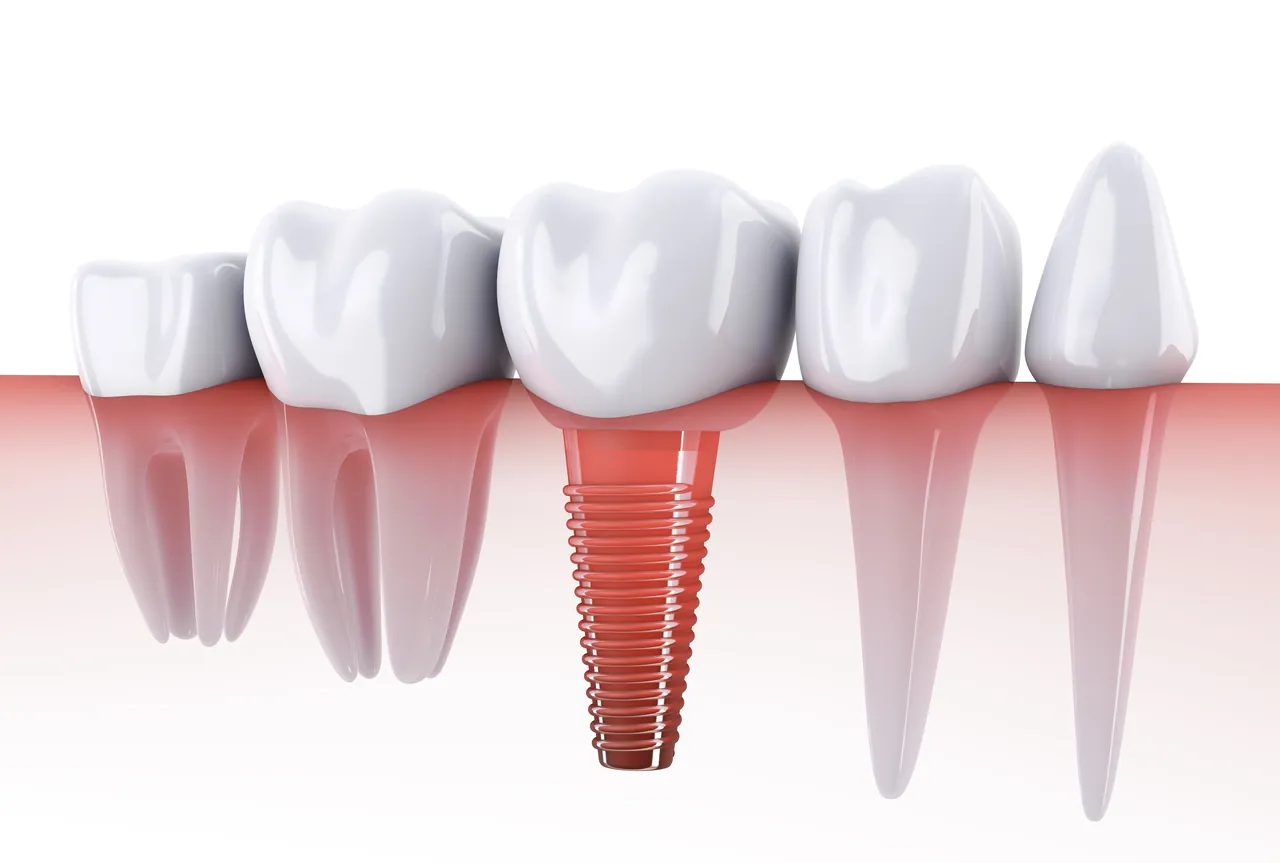
Dental implants are widely considered the gold standard for replacing missing teeth. At Casa Dental Group, implants offer a permanent, natural-looking, and natural-feeling solution to tooth loss that preserves bone, restores full chewing function, and lasts decades or even a lifetime.
That combination is what sets implants apart if you are missing a tooth in Concord or elsewhere in the East Bay. The space you see is only part of the change. The bone that once held the tooth root also begins to deteriorate after tooth loss. A dental implant is placed where that root used to be, so it can preserve bone, restore chewing, and feel closer to a natural tooth than a restoration that sits on top of the gums or leans on neighboring teeth.
Implants compared with bridges
Unlike bridges, implants don't require modifying adjacent teeth. A traditional dental bridge is anchored to the teeth on either side of the gap, which means those teeth are prepared so they can support the bridge. A dental implant stands in the bone on its own, so the neighboring teeth can stay as they are.
Single implants are also better than bridges because you can floss them like natural teeth. A bridge lasts about seven years on average, while an implant can last close to a lifetime. The timeline for implant treatment is longer than it is for a bridge, and the upfront investment of time and money is greater. The result is a permanent solution that doesn't require adjusting adjacent teeth and offers superior function.
Implants compared with dentures
Unlike traditional dentures, implants provide stability and chewing ability comparable to natural teeth. A regular denture can move around or come loose when you eat or speak. Implants are permanent and don't move around or come loose in that way.
They also preserve bone. Once you lose a tooth, you lose bone in that area for good, and an implant helps you keep it, along with the youthful look that comes with it. If you are missing several teeth, or if you already wear a denture, implant bridges and implant overdentures (also called implant-supported dentures) are options we offer at Casa. We discuss all options at consultation, including the trade-offs of each alternative.
How a Dental Implant Works
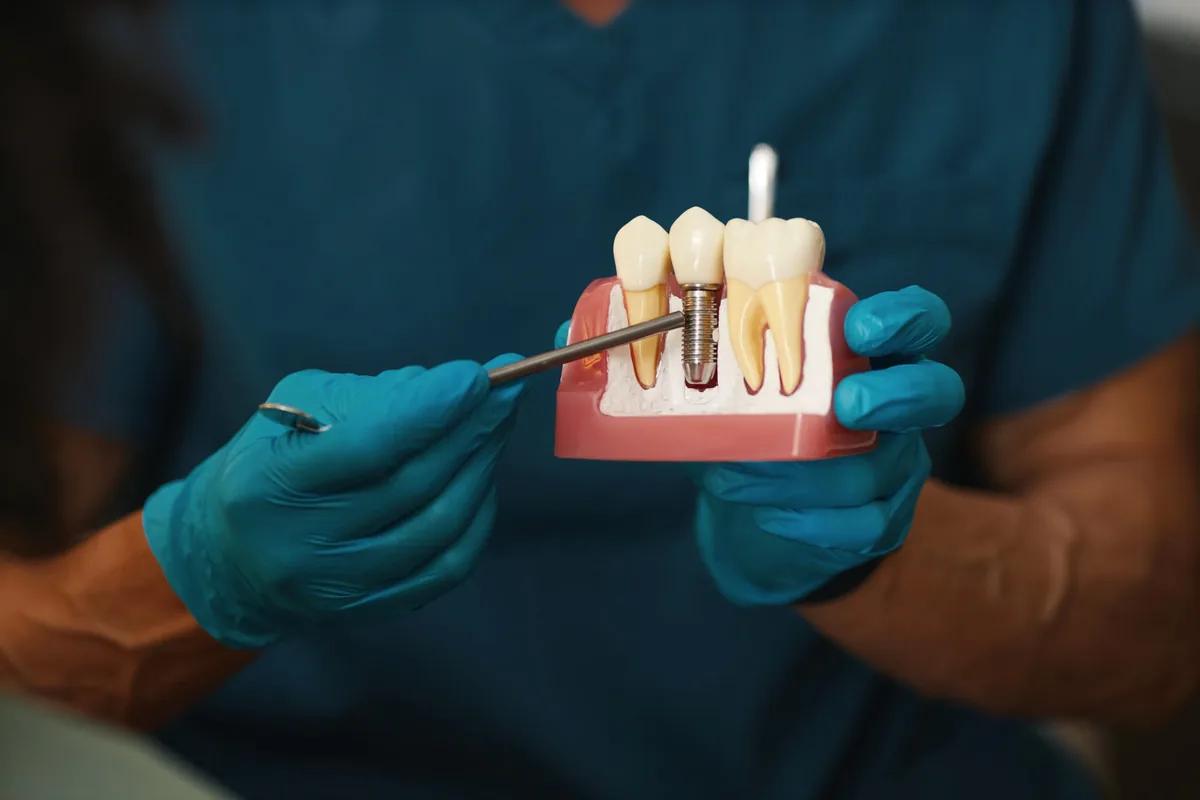
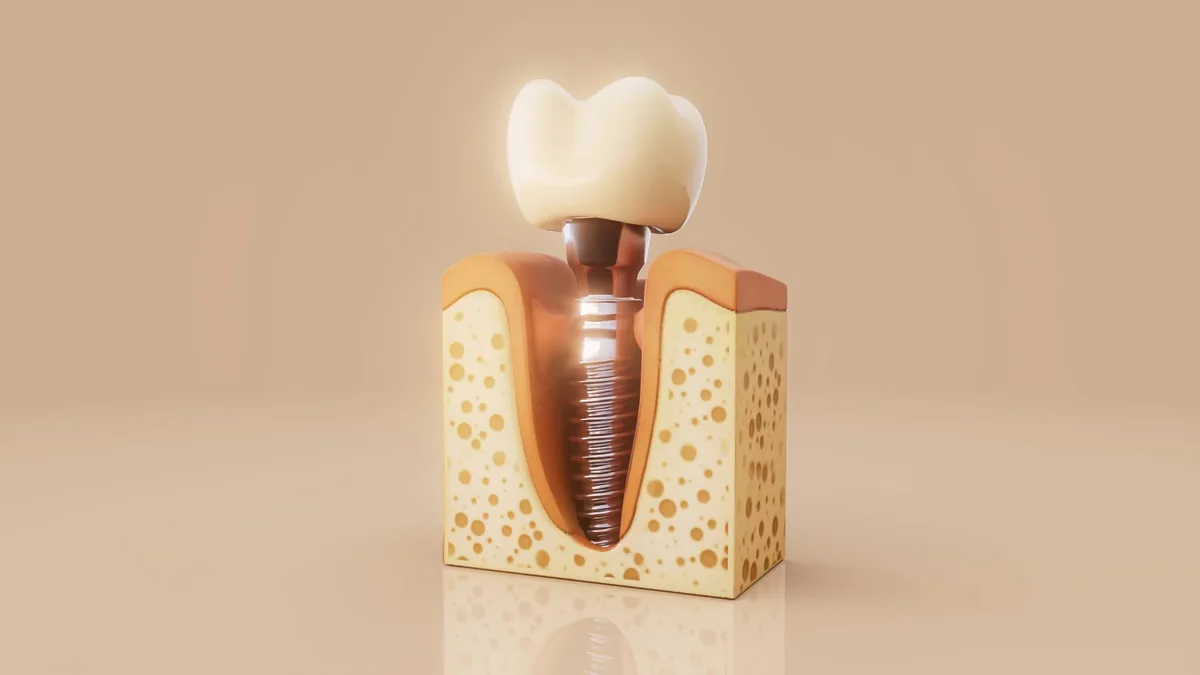
A dental implant consists of three parts: a titanium post that's surgically placed into the jawbone where the missing tooth root would be, an abutment that connects the post to the visible portion, and a custom crown (or bridge or denture) that attaches on top.
The post is the foundation. It goes in the bone and takes the place of the missing root. The abutment is the connector between that post and the tooth you will see. The crown, bridge, or denture is the visible, chewing surface. Which of those restorations goes on top depends on how many teeth you are replacing and what fits your smile. At Casa, that can be a single crown, a bridge, or implant-supported dentures.
The titanium post fuses with the jawbone over several months in a process called osseointegration, creating a stable foundation that mimics a natural tooth root. This biological integration is what makes implants so successful and long-lasting. It is also why implant treatment is planned in stages rather than finished in a single day. The healing time is the period your bone needs in order to hold the post securely before the final tooth is attached.
The implant process typically takes 4 to 6 months from start to finish. The first phase involves surgical placement of the implant post, followed by a 3 to 6 month healing period during which the implant fuses with the bone. Once integration is confirmed, the abutment and crown are placed. While this timeline is longer than alternatives like bridges, the result is a permanent solution that doesn't require adjusting adjacent teeth and offers superior function. For patients with sufficient bone, this treatment preserves jawbone that would otherwise deteriorate after tooth loss. For patients with bone loss, bone grafting may be performed before or with implant placement.
When the tooth is already missing, Casa's typical path is more specific. We place the implant in one 45-minute appointment. You wait about 3 months, then we take the impression for the implant crown. About 2 weeks later, we seat the crown. If a bone graft is needed, treatment takes longer because the graft must heal before the implant is placed. Some specialized techniques offer faster timelines but aren't appropriate for every case. We will map the right path with you at your consult.
Meet Dr. Kim, Casa's Implant Surgeon
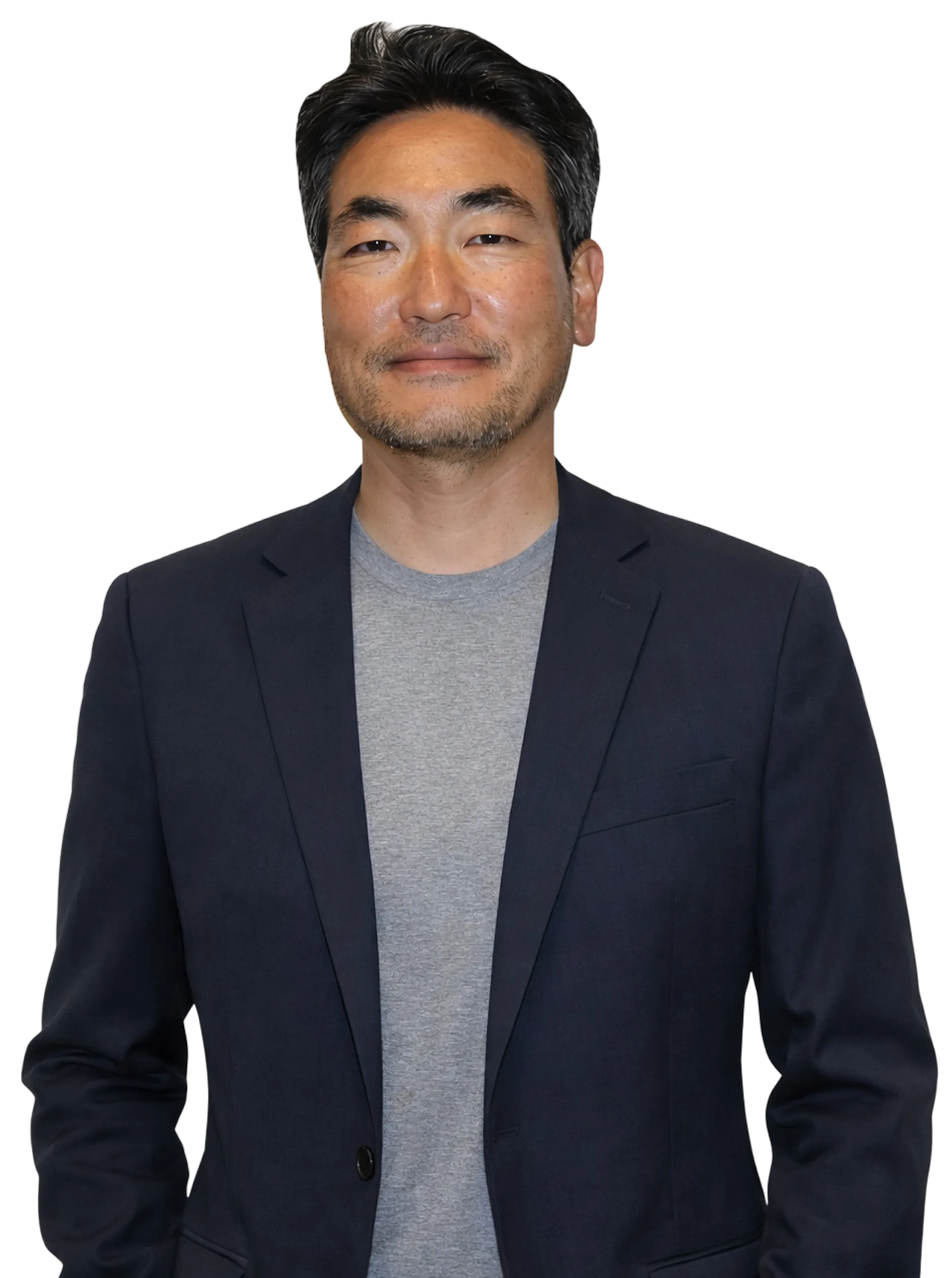
Casa Dental Group places dental implants at 1126 Meadow Lane in Concord, and the same office makes the crown, bridge or denture that goes on the implant. Dr. Hak Kim is one of our general dentists, with a focus on oral surgery.
At Casa Dental Group, implants are placed by Dr. Kim, who limits his practice to tooth removal and implant placement. He has been placing dental implants for 20-plus years, and our team has placed more than 500 implants.
That focused practice matters if you are choosing where to have an implant placed in Concord or the East Bay. You are seen by a surgeon whose work is built around extractions and implant placement, with a team that has walked this process many times. Every case is evaluated thoroughly, including 3D imaging when needed. We walk you through the full plan, including timeline, costs, and what goes on top.
Our focus is long-term success, with realistic expectations and proper aftercare. When you come in for a consult, Dr. Kim can talk through comfort, timing, and which option fits your smile.
Meet Dr. Kim and get a clear plan for your smile.
Single-Tooth Implants
A single-tooth implant replaces one missing tooth with one implant and a custom crown.
Who it's for
This option is for patients who are missing a single tooth and want a replacement that stands on its own. It is often a strong fit when the teeth next to the space are healthy, because a single implant does not require those neighboring teeth to be modified the way a traditional bridge does.
What to expect
Every case is evaluated thoroughly, including 3D imaging when needed, so Dr. Kim can develop a precise implant placement plan. If the tooth is already missing and a graft is not required first, the implant is placed in one 45-minute visit. Temporary teeth can be provided while you heal when needed. After about 3 months of healing, we take an impression for the implant crown, and the crown is seated about 2 weeks later. If a bone graft is part of your plan, the overall timeline is longer because the graft must heal before the implant is placed.
Benefits
You can floss a single implant like a natural tooth. The implant helps preserve bone in the site where the tooth was lost, instead of leaving that area to deteriorate. It does not rely on neighboring teeth for support. And while a bridge lasts about seven years on average, an implant can last close to a lifetime. The tooth you see is a custom crown made to complete your smile.
Implant Bridges
An implant bridge replaces more than one missing tooth. The teeth you see are supported by implants, not by preparing the natural teeth on either side of the gap.
Who it's for
This option is for patients who are missing more than one tooth and want a fixed replacement rather than a removable partial denture. A partial denture is removable and less stable. An implant bridge is planned as a stationary restoration on implants. At your consult, we will talk through whether an implant bridge, single implants, or another option is the better fit.
What to expect
We evaluate your bone, gum health, and overall oral situation through imaging and exam to develop a precise implant placement plan. Every case is evaluated thoroughly, including 3D imaging when needed. Dr. Kim places the implants. Healing still depends on osseointegration, which typically takes place over a period of months. Once integration is confirmed, a custom bridge is attached on top. We walk you through the timeline, costs, and whether temporary teeth while you heal are needed.
Benefits
Unlike a traditional bridge, an implant bridge does not require modifying adjacent teeth, because the support comes from implants in the bone rather than from neighboring natural teeth. Implants provide stability and chewing ability comparable to natural teeth, and they help preserve bone in the areas that are treated. This is one of the restorations we plan with patients from Concord and the East Bay who need to replace several teeth.
Implant Overdentures and Implant-Supported Dentures
Implant overdentures, also called implant-supported dentures, are dentures held by dental implants rather than resting on the gums alone.
Who it's for
This option is for patients who are missing many teeth, or who already wear a traditional denture and want more stability. Traditional dentures can move around or come loose. An implant-supported denture is designed to stay more secure because it is supported by implants.
What to expect
Dr. Kim and our team will evaluate your bone and overall oral health, using in-house digital CBCT 3D imaging when needed, and walk you through the full plan, including timeline, costs, and what goes on top. Temporary teeth while you heal can be part of that plan when needed. The underlying steps are still plan, place, heal, and restore. Your consult is where we confirm whether an implant overdenture is the right restoration for you.
Benefits
Unlike traditional dentures, implants provide stability and chewing ability comparable to natural teeth. They don't move around or come loose in the same way a regular denture can. Implants also preserve bone, which a conventional denture sitting on the gums does not do in the same way. Once you lose a tooth, you lose bone in that area for good, and an implant helps you keep it, along with the youthful look that comes with it.
Not sure which option fits you? Dr. Kim will walk you through each one.
Bone Grafting
Not every patient has enough bone for an implant on the first visit. That does not automatically mean an implant is off the table.
Who it's for
Bone grafting is for patients who have bone loss in the area where an implant would be placed. Conditions that may complicate implant placement include significant bone loss, and in many cases this can be addressed with bone grafting before implant placement. A consultation determines candidacy.
What to expect
Patients with insufficient bone can often be treated with bone grafting before or during implant placement. Bone grafts use your own bone, donor bone, or synthetic materials to build up the area where the implant will be placed. The graft heals over several months before the implant is placed. Most patients with bone loss can still receive implants with proper preparation.
At Casa, we do bone grafts in-house, and we have digital CBCT 3D imaging in-house to help plan treatment. Cases requiring bone grafting take longer than the typical implant path because the graft must heal before the implant is placed. Bone grafting, if needed, is a separate cost from the implant and crown, and the exact cost is confirmed at your consult.
Benefits
For patients with bone loss, grafting is often what makes a stable implant possible. For patients with sufficient bone, implant treatment itself preserves jawbone that would otherwise deteriorate after tooth loss. In both situations, the aim is a foundation that can support the implant for the long term.
How Treatment Works
Dental implants are a significant investment of time and money, but the results are often life-changing. Here is how treatment works at Casa Dental Group, from the first plan through your finished tooth.
-
Plan
If you're missing one tooth or several, the first visit is an exam with digital X-rays, so the dentist can tell you which option fits. We evaluate your bone, gum health, and overall oral situation through imaging and exam to develop a precise implant placement plan. Every case is evaluated thoroughly, including 3D imaging when needed. At Casa, that imaging can be done with our in-house digital CBCT. We walk patients from Concord and the East Bay through the full plan, including timeline, costs, and what goes on top: a single crown, a bridge, or implant-supported dentures, with temporary teeth while you heal when needed.
This is also when we confirm candidacy and talk through bone grafting if it is needed. Give our office your plan information and we will verify your benefits and provide an estimate before treatment begins.
-
Place
The titanium implant post is surgically placed into the jawbone under local anesthesia or sedation. When the tooth is already missing, we place the implant in one 45-minute appointment. Dr. Kim, who limits his practice to tooth removal and implant placement, is the surgeon who places implants at Casa.
-
Heal
Over 3 to 6 months, the implant fuses with the bone in a process called osseointegration, creating a stable foundation. On Casa's typical path when the tooth is already missing, this healing period is about 3 months. If a graft was part of your treatment, the graft also needs time to heal, which lengthens the overall timeline. Temporary teeth while you heal can be provided when needed, so you are not left without a tooth during this stage.
-
Restore
Once integration is confirmed, a custom abutment and crown are placed, completing your new tooth. After the healing period, we take the impression for the implant crown, and about 2 weeks later the crown is seated. If your restoration is a bridge or an implant-supported denture, that prosthesis is made and attached at this stage instead of a single crown. The crown is placed at the same office once the implant has healed.
While this timeline is longer than alternatives like bridges, the result is a permanent solution that doesn't require adjusting adjacent teeth and offers superior function. Our focus is long-term success, with realistic expectations and proper aftercare.
In-House Digital CBCT 3D Imaging
Casa has digital CBCT 3D imaging in-house. We use imaging and a clinical exam to evaluate your bone, gum health, and overall oral situation and to develop a precise implant placement plan. Every case is evaluated thoroughly, including 3D imaging when needed.
Having that scanner in the office means this planning step can happen here. 3D imaging helps us see the bone where an implant would be placed, which is especially important if we are deciding whether a bone graft is needed and how to place the implant securely.
A Word From Dr. Tran
"If you're weighing how to replace a missing tooth, I always encourage patients to think long term. Dental implants are permanent, so unlike dentures, they won't shift or come loose. They also protect your jawbone. Once a tooth is lost, you begin to lose bone in that area for good, and an implant helps you keep it, along with the natural, youthful look that comes with it. Compared with a bridge, a single implant can be flossed just like a natural tooth, and while a bridge lasts about seven years on average, an implant can last close to a lifetime. For most patients, that makes an implant the longest-lasting way to replace a tooth."
What Dental Implants Cost at Casa
An implant with its crown typically runs $2,800 to $3,200 at Casa.
The exact cost is confirmed at a consult. Several things can affect what you pay overall. Bone grafting, if needed, is a separate cost. The range above is for an implant with its crown. If your treatment involves an implant bridge or an implant overdenture, we will go over that restoration and its cost at your consult, rather than apply this crown range to a different type of treatment.
Dental implants are a significant investment of time and money, but the results are often life-changing. We walk you through costs as part of the full plan, and we provide an estimate before treatment begins.
Insurance and staging benefits across years
Coverage for implants varies more than for almost any other treatment, though many plans now include at least some implant benefit under major restorative care. Some plans cover the restoration that goes on the implant but not the surgical placement, so one part of your treatment may be covered while another is not. Most plans have an annual maximum, and because implant treatment is usually staged over several months, it is sometimes possible to plan the stages across two benefit years so more of the treatment falls within coverage. Plans may also apply a missing tooth clause or a waiting period before major treatment is covered. Give our office your plan information and we will verify your benefits and provide an estimate before treatment begins.
Membership and financing
You can also review the Casa Membership Plan and our financing options. We will go over what applies to your treatment at your consult.
Financing is available through Cherry, Sunbit and CareCredit®, with 0% APR options. Members of the Casa Membership Plan get 10 to 20% off.
Get your personal treatment plan and cost estimate at your consult.
Comfort and Recovery
The implant placement procedure is performed under local anesthesia or sedation. When the tooth is already missing, placement itself is a single 45-minute visit.
Most patients report minimal pain during the surgery itself. Post-operative discomfort is typically managed with over-the-counter pain relievers and resolves within a few days to a week. Most patients describe the recovery as easier than they expected, similar to a tooth extraction.
Comfort can vary from person to person, so we will not promise that every visit will feel the same. Dr. Kim can talk through comfort with you at the consult so you know what to expect before treatment begins. After placement, follow the aftercare instructions you are given, and contact the office if something does not feel right as you heal.
Caring for Your Implant
Implants are cared for like natural teeth. Brush twice daily, floss daily (special floss may help around implants), and attend regular dental cleanings. Avoid chewing very hard foods or using your teeth as tools. If you smoke, quitting significantly improves implant success and longevity. Regular checkups allow us to monitor the implant and surrounding tissues for early signs of any concerns.
Long-term success requires good oral hygiene, regular dental visits, and avoiding habits like smoking that can compromise implants. With proper care, dental implants can last 25 years or longer, and many last a lifetime. The implant post itself is highly durable. The crown attached to the implant typically needs replacement every 10 to 20 years due to normal wear, similar to other crowns. Keeping up with home care and professional visits is how you protect that investment.
The Latest on Dental Implants in Concord
Last updated
Here is what implant care looks like at Casa Dental Group right now, for patients in Concord and the East Bay.
Casa has in-house digital CBCT 3D imaging, so implant planning can be done here in the office. Every case is evaluated thoroughly, including 3D imaging when needed, to develop a precise placement plan.
When the tooth is already missing, implant placement is one 45-minute visit with Dr. Kim. After about 3 months of healing, we take an impression for the crown, and the crown is seated about 2 weeks later.
Today, an implant with its crown typically runs $2,800 to $3,200 at Casa. The exact cost is confirmed at a consult, and bone grafting, if needed, is a separate cost.
If you have dental benefits in 2026, it is worth talking with us before the year ends. Coverage for implants varies, and most plans have an annual maximum. Because implant treatment is usually staged over several months, it is sometimes possible to plan the stages across two benefit years so more of the treatment falls within coverage. We will not guess at your benefits. Give our office your plan information and we will verify your benefits and provide an estimate before treatment begins.
Patients from Concord and the East Bay choose Casa because implants are placed by Dr. Kim, who limits his practice to tooth removal and implant placement and has been doing this work for 20-plus years. Our team has placed more than 500 implants. We do bone grafts in-house, we have digital CBCT in-house, and we walk you through the full plan, including timeline, costs, and temporary teeth while you heal when needed. Our focus is long-term success, with realistic expectations and proper aftercare.
Make the most of your 2026 benefits. Book your implant consult today.
Call (925) 808-7335 to book a consultation.
Frequently Asked Questions
Everything you need to know about Dental Implants
Ready to schedule?
Call us at (925) 808-7335 or book online.